
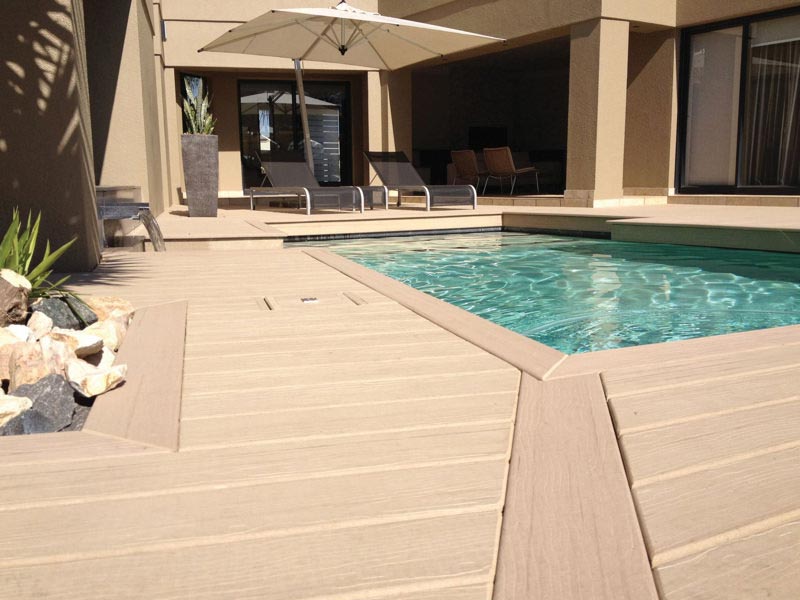
A great pool deserves a deck that matches it, one that stays cool underfoot, drains properly, and holds up to years of sun, splashes, and foot traffic. Yet a lot of homeowners focus entirely on the pool itself and treat the deck as an afterthought. That’s a mistake, because the wrong surface can turn a beautiful pool into a slippery, cracked, or scorching-hot hazard within just a few seasons.
Quick answer: The best pool deck materials are slip-resistant, heat-reflective, and built to handle constant moisture. Composite decking, natural stone, and stamped concrete are the top choices, each with different trade-offs in cost, comfort, and maintenance.
Here’s how to think through the decision.
Why Pool Decks Need Different Materials Than Regular Decks
A standard backyard deck deals with rain and foot traffic. A pool deck deals with constant splashing, sunscreen residue, bare feet, and pool chemicals, all while baking in direct sun for hours at a time. That combination changes what “durable” actually means.
The material around your pool needs to:
- Stay cool enough to walk on barefoot in summer
- Resist slipping when wet
- Handle chlorine, salt, or mineral exposure without staining or degrading
- Drain water quickly instead of pooling
Not every decking material checks all four boxes, which is why the choice matters more here than almost anywhere else in your yard.
Top Pool Deck Material Options
Composite Decking
Modern composite boards are a popular choice for pool decks because they’re engineered to resist moisture, fading, and mold, all without the splintering risk of wood. Many composite lines also offer textured, slip-resistant surfaces designed specifically for wet areas.
The trade-off is heat. Darker composite colors can get hot in direct sun, so lighter tones are usually the better pick for pool surrounds.
Natural Stone
Travertine, flagstone, and similar natural stones are a favorite around pools because they stay noticeably cooler underfoot than most other materials, even in full sun. They also age well and have a timeless, upscale look.
Stone tends to be one of the pricier options, and it needs periodic sealing to prevent staining from chemicals and minerals.
Stamped Concrete
Stamped concrete gives you the texture and look of stone or pavers at a lower cost, and it can be tinted or textured to reduce slipperiness. It’s a durable, low-maintenance option, though it can crack over time with ground shifting, and repairs are harder to blend seamlessly.
Pavers
Interlocking pavers offer good drainage between joints and are relatively easy to repair, since a single damaged paver can be swapped out without redoing the whole surface. They do require a solid base installation to prevent shifting over the years.
What to Consider Before You Choose
Climate matters. Homes in consistently hot, sunny regions benefit from lighter-colored, heat-reflective materials. Homes in colder climates need materials that handle freeze-thaw cycles without cracking.
Budget isn’t just the install cost. Some materials, like natural stone, cost more upfront but need less frequent repair. Others, like basic concrete, are cheaper initially but may need resurfacing sooner.
Slip resistance should never be an afterthought. Around a pool, a smooth, polished finish looks nice in photos but can become dangerous the moment it’s wet.
Real-World Insight
On most pool deck projects, the deciding factor usually isn’t the material itself, it’s how the deck is sloped and drained. Even the best material will hold water and grow slippery over time if the base isn’t graded correctly during installation. That’s a detail worth asking about directly when getting quotes, regardless of which surface you choose.
If you’re comparing materials specifically for a pool surround, working with Custom Pool Deck Builders who understand drainage, slope, and material performance can save you headaches down the road, no matter which surface you land on.
Take a closer look at our pool decks services for more on drainage, texture, and heat performance.
Frequently Asked Questions
What is the coolest material for a pool deck? Light-colored natural stone, such as travertine, typically stays coolest underfoot, followed by light-toned composite decking.
Is composite decking safe around a pool? Yes, as long as it’s a textured, slip-resistant composite product designed for wet environments. Smooth composite boards can become slippery when wet.
How often does a stamped concrete pool deck need resealing? Most stamped concrete pool decks should be resealed every 2-3 years to maintain color, slip resistance, and protection from chemical exposure.
Can I mix materials on one pool deck? Yes, many homeowners combine materials, for example, stone coping around the pool edge with composite or concrete for the surrounding deck area, to balance cost, comfort, and style.
Final Thoughts
Choosing a pool deck material comes down to balancing comfort, safety, and long-term maintenance against your budget. Composite, stone, stamped concrete, and pavers each bring something different to the table, and the right one depends on your climate, how the space will be used, and how much upkeep you’re willing to take on.
If you’re planning a new pool or updating the surface around an existing one, the team at South Shore Decks Corp can help you choose and build a deck that’s made to last, whichever material you land on.