
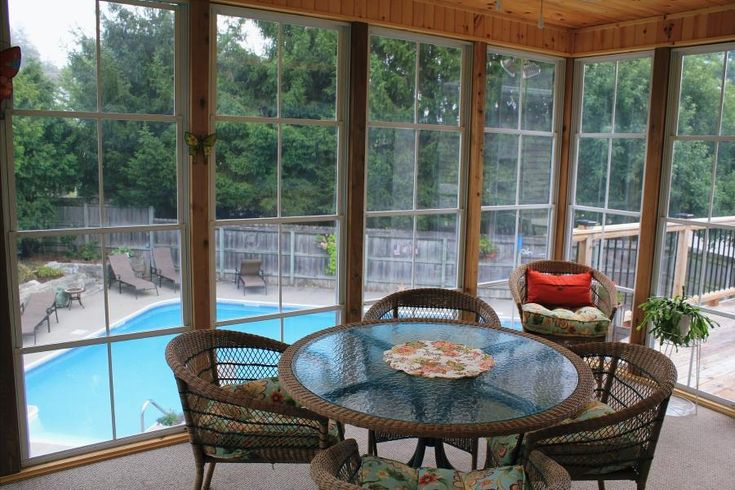
A 3 season room sits in an interesting middle ground — more than a screened porch, less than a full home addition, and priced closer to the former than the latter. For homeowners on the South Shore who want extra living space without the cost and permitting weight of a full addition, it’s one of the most practical upgrades available.
This guide covers what a 3 season room actually is, how it differs from similar options, what goes into building one, and what to expect from cost to timeline.
What Is a 3 Season Room?
A 3 season room is an enclosed, insulated space attached to a home that’s designed for comfortable use in spring, summer, and fall — the three seasons where extreme cold isn’t a factor. It typically features energy-efficient windows, screened or glass panel walls, and a roof structure that ties into the existing home, creating a space that feels like an indoor room while staying connected to the outdoors.
Unlike a simple screened porch, a 3 season room is fully enclosed and weatherproofed against wind and rain. Unlike a sunroom, it typically isn’t built with a dedicated heating and cooling system, which keeps both the construction cost and ongoing energy use lower.
3 Season Room vs. Sunroom vs. Screened Porch
This is the comparison that trips up most homeowners early in the planning process, since all three options look similar from the outside but serve different purposes.
| Feature | Screened Porch | 3 Season Room | Sunroom |
|---|---|---|---|
| Climate control | None | None (passive insulation) | Full heating/cooling |
| Usable seasons | Warm months only | Spring, summer, fall | Year-round |
| Enclosure type | Screen only | Insulated windows/walls | Insulated windows/walls |
| Typical cost | Lowest | Moderate | Highest |
| Permitting complexity | Low | Moderate | Higher |
| Added home value | Modest | Good | Strongest |
| Best for | Bug protection, budget builds | Extended-season living space | Full year-round room |
A 3 season room essentially captures most of the livability of a sunroom — a real enclosed room with proper windows — while skipping the mechanical systems that drive up both the upfront cost and the monthly utility bill.
Benefits of Adding a 3 Season Room
More usable living space. A 3 season room extends a home’s functional square footage for entertaining, dining, or simply relaxing, without the scope of a full addition.
Energy efficiency. Because these rooms rely on insulated windows and construction rather than active climate control, they stay comfortable through mild and warm months with minimal energy draw.
Indoor-outdoor connection. Large window areas keep the space feeling open and connected to the yard while still offering full protection from bugs, wind, and rain.
Home value. A well-built 3 season room is viewed by most buyers and appraisers as genuine finished living space, which tends to support a stronger return than lower-impact outdoor upgrades.
Lower cost than a full addition. Because the structure doesn’t require full HVAC integration or the same foundation depth as a year-round addition, it typically comes in at a meaningfully lower price point.
What Goes Into Building One
Site evaluation and design. A contractor assesses the attachment point on the home, sun exposure, and how the room will tie into existing rooflines before finalizing a design.
Foundation and framing. Depending on the design, this may involve a slab, pier, or deck-style foundation, followed by framing that matches the home’s structural requirements.
Window and enclosure installation. Energy-efficient window systems — whether fixed panel, vinyl, or modular kits — are installed to enclose the space while maximizing natural light.
Roofing and finishing. The roof structure is tied into the home, and interior finishing (flooring, ceiling, trim) is completed to match the intended use of the space.
Final inspection and walkthrough. Local permitting typically requires a final inspection before the space is signed off as complete, followed by a walkthrough with the homeowner.
Design Options to Consider
Most 3 season rooms fall into a few general categories: prefabricated modular kits, which offer a faster and more budget-friendly build using standardized window panel systems; fully custom-built rooms, which are framed and finished to match the exact style and layout of the home; and converted existing spaces, such as enclosing an existing patio or open porch rather than building an entirely new footprint. The right choice usually comes down to budget, how closely the room needs to match existing architecture, and how much flexibility is wanted in layout and finishes.
How Long Does Installation Take?
Most 3 season room projects take between one and three weeks to complete once construction begins, though the total timeline — including design, permitting, and material lead times — often runs several weeks to a couple of months from initial consultation to finished room. Projects with more complex designs, custom window configurations, or additional permitting requirements tend to fall on the longer end of that range.
What Does a 3 Season Room Cost?
Cost varies significantly based on the size of the room, the window and enclosure system chosen, foundation type, and any interior finishing details like flooring or built-ins. Prefabricated modular systems tend to sit at the lower end of the cost range, while fully custom-built rooms with premium finishes run higher. Because pricing depends so heavily on the specifics of each project, most contractors provide a detailed estimate only after an in-home consultation.
Is a 3 Season Room Right for Your Home?
A 3 season room tends to be the right fit for homeowners who want genuine additional living space without the full cost and complexity of a year-round addition, who are comfortable with the space seeing lighter use during the coldest winter months, and who want a faster path to extra square footage than a full renovation typically allows. Homeowners who specifically want a space usable in deep winter, or who plan to eventually convert the room into a fully climate-controlled living area, may be better served starting with a sunroom design instead — though some 3 season room builds can be designed with future HVAC integration in mind.
Maintaining a 3 Season Room
- Clean window tracks and seals periodically to keep them operating smoothly
- Inspect weatherstripping annually and replace it if it’s showing wear
- Keep gutters and roofline connections clear to prevent water intrusion at the attachment point
- Address any condensation buildup promptly to avoid moisture damage over time
- Touch up exterior finishes as needed to match the rest of the home’s maintenance schedule
Frequently Asked Questions
Can a 3 season room be converted into a sunroom later? In many cases, yes — if the room is designed with future HVAC integration in mind, adding heating and cooling later is a realistic upgrade path rather than a full rebuild.
Do 3 season rooms require a permit? Most municipalities require permitting for a 3 season room since it’s a structural addition to the home, and the process is generally more involved than a simple screened porch but less than a full addition.
Will a 3 season room work with an existing deck or patio? Yes — many 3 season rooms are built by enclosing an existing deck or patio footprint, which can shorten both the timeline and cost compared to building an entirely new structure.
How much maintenance does a 3 season room actually need? Compared to a full addition, maintenance is relatively light — mostly seasonal checks on window seals, weatherstripping, and the roofline connection to the home.
Final Thoughts
A 3 season room offers a genuine middle path between a basic screened porch and a full home addition — real enclosed living space, meaningful energy efficiency, and a cost that fits a wider range of budgets. Getting the design, foundation, and window system right from the start is what determines how well the room performs for years to come. For homeowners exploring their options, South Shore Decks Corp. brings decades of local building experience to help plan and construct a 3 season room built to handle Massachusetts weather.